Elena Brooks · 30 September 2026
Residents Examine Links Between Rising Taxes and Wildlife Protection Initiatives Along the Coast
Coastal communities have watched property taxes climb steadily over recent years while local governments allocate portions of those revenues toward wildlife protection measures such as nesting habitat restoration and predator control programs, and residents in places like Carova now review public records to trace exactly how those funds connect. Data from county budget reports show tax levies increased by an average of 12 percent between 2023 and 2025 in several shoreline municipalities, with wildlife initiatives accounting for roughly 8 percent of the new revenue according to figures released by the North Carolina Department of Environmental Quality.
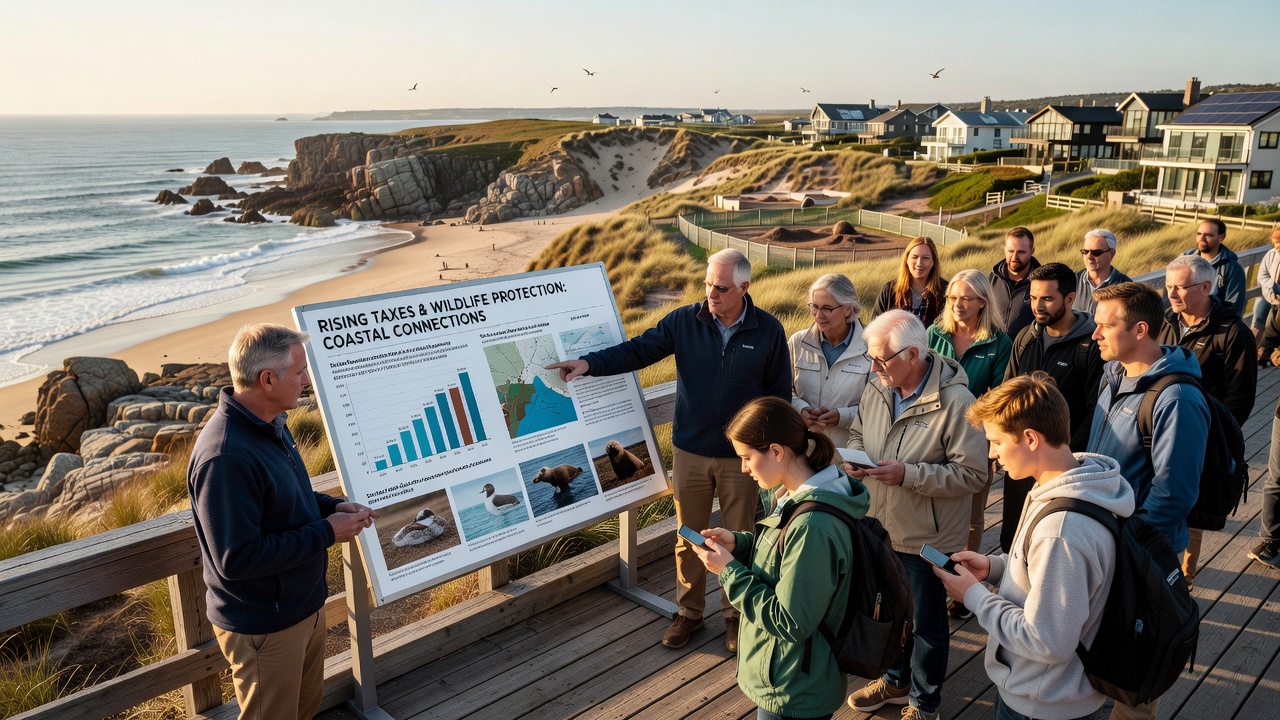
Meetings scheduled for September 2026 will bring together property owners, conservation biologists, and fiscal analysts to examine line-item expenditures on projects that include sea turtle monitoring stations and dune vegetation planting crews. Those sessions follow earlier workshops where participants compared assessment rolls against grant applications submitted to federal agencies, and the process reveals that several tax-funded contracts now support seasonal staffing for beach patrols that once relied entirely on volunteer networks.
Tax Revenue Trends and Allocation Patterns
County assessors have documented rising valuations tied to coastal property demand, yet the same documents indicate that a measurable share of the resulting tax collections flows into dedicated conservation accounts rather than general infrastructure maintenance. Observers note that one mid-sized coastal county directed $2.4 million from its 2025 levy toward habitat fencing and educational signage, while neighboring jurisdictions reported similar percentages channeled through special districts created under state enabling legislation. Researchers from the University of North Carolina Coastal Studies Institute have compiled these figures into comparative tables that allow residents to map specific tax parcels against protected zones.
Budget documents further show that millage rates for conservation purposes rose in tandem with overall levies, although the absolute dollar amounts remain modest compared with road and utility expenditures. Residents who attended preliminary forums in 2025 requested clearer breakdowns that separate wildlife line items from broader environmental management categories, and county staff responded by publishing interactive spreadsheets that tag each outlay with its statutory authority.
Wildlife Protection Programs Under Review

Protection efforts along the shoreline encompass seasonal closures for piping plover nesting, installation of predator exclosures for loggerhead turtle eggs, and removal of invasive vegetation that crowds native dune grasses. State wildlife biologists report that these measures have coincided with measurable upticks in fledging success rates for several shorebird species, according to annual surveys conducted by the North Carolina Wildlife Resources Commission. Funding for the work arrives through a combination of local tax receipts, federal grants administered by the National Oceanic and Atmospheric Administration, and occasional private donations.
One program that drew particular attention during recent budget reviews involves contracted biologists who conduct weekly nest inventories from May through October, and payment records indicate these contracts draw directly from the conservation portion of the property tax roll. Residents reviewing the contracts note that similar services in other states receive larger federal matching funds, prompting questions about whether local tax dollars could be leveraged more efficiently against outside sources.
Community Data Review Process
Local civic groups have organized spreadsheet review sessions where volunteers cross-reference tax statements with project completion reports, and participants report discovering that certain line items labeled “beach maintenance” actually cover wildlife-specific tasks such as signage replacement after storm damage. These discoveries have led to formal requests for supplemental budget narratives that list contractor names alongside the precise conservation outcomes delivered. Analysts at the Coastal Resources Commission have supplied maps that overlay protected areas with the tax districts contributing the largest shares of revenue, giving residents a visual tool for tracing the money flow.
Public records requests filed since early 2025 have yielded invoices that detail equipment purchases ranging from all-terrain vehicles used by patrol teams to temperature loggers placed inside nest enclosures. The same documents show that a portion of the tax allocation covers liability insurance for volunteers who assist during peak nesting season, an expense category that did not appear in earlier fiscal years. Such granular detail allows property owners to calculate per-parcel contributions to specific initiatives and compare those amounts against observed ecological outcomes reported in the annual wildlife summaries.
Looking Ahead to September 2026 Sessions
Preparations for the upcoming meetings include distribution of updated budget projections that forecast continued growth in both property assessments and conservation expenditures through 2028. County finance officers have circulated draft documents that project an additional 3 percent increase in the wildlife protection levy component, contingent on voter approval of pending bond measures that would expand habitat corridors. Residents have formed working groups to prepare questions that focus on measurable return on investment, such as changes in nesting density per dollar spent, rather than general statements about environmental benefit.
External data sources remain available for cross-checking local figures, including reports from the National Oceanic and Atmospheric Administration on regional sea turtle population trends and a comparative study published by Environment and Climate Change Canada that examines how provincial levies support shorebird recovery in Atlantic Canada. Those documents provide benchmarks against which local expenditures can be evaluated during the September sessions.
Conclusion
The examination process now underway connects rising tax obligations directly to the operational costs of maintaining protected coastal zones, and residents continue to compile detailed comparisons between revenue collected and conservation results achieved. September 2026 forums will serve as the next checkpoint where updated allocation tables and ecological monitoring data can be reviewed side by side, giving property owners further opportunity to assess the fiscal mechanics behind ongoing wildlife protection initiatives.