Ines Hughes · 16 September 2026
Carova's Community-Led Oral History Project Captures Vanishing Fishing Traditions
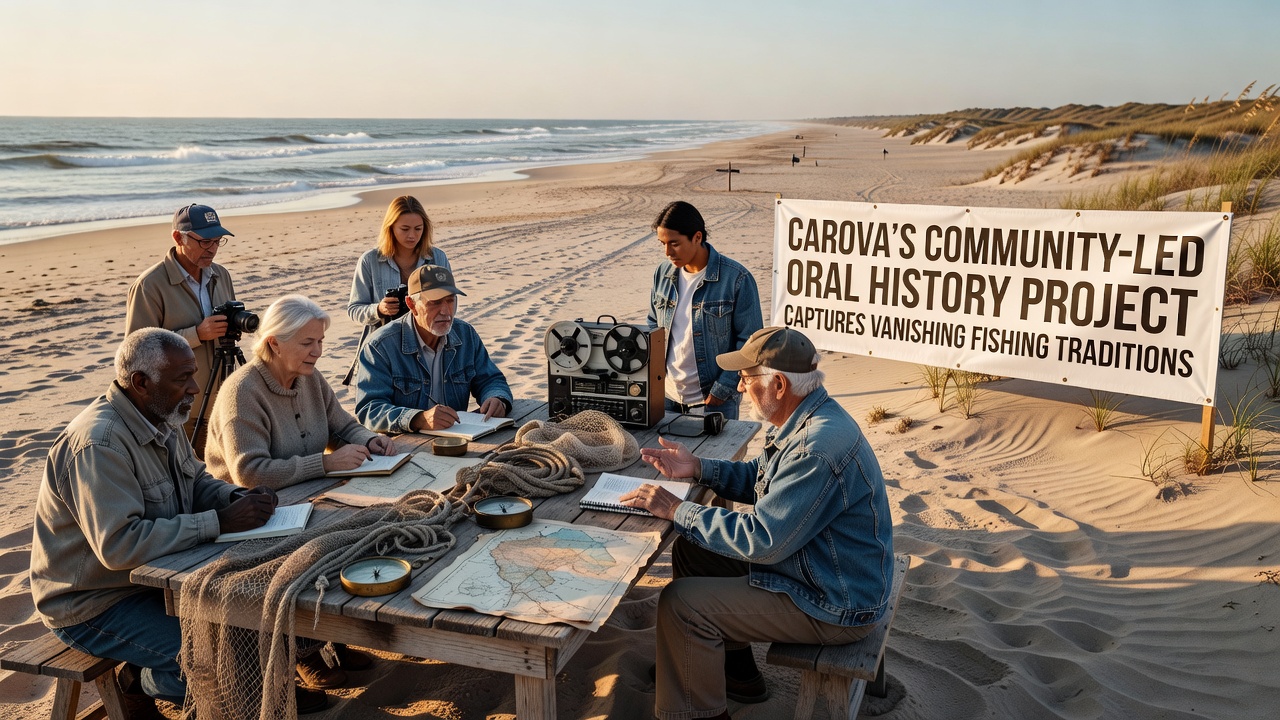
Residents in Carova have launched a community-led oral history project that documents fishing traditions facing decline along the Outer Banks coastline, and the effort draws on recorded interviews, archival photographs, and local artifacts to preserve knowledge passed down through generations. The initiative began in early 2025 when a group of longtime families partnered with regional historians to collect stories from commercial and recreational fishers who recall specific techniques for netting, crabbing, and boat handling that have become less common since the 1990s.
Project Origins and Scope
Local organizers formed the Carova Fishing Heritage Collective after noticing that fewer young residents entered the trade and that equipment such as wooden skiffs and hand-woven nets had started to disappear from storage sheds. Project coordinators scheduled sessions at the community center where participants described seasonal migration patterns of blue crabs and the use of tide charts carved into wooden planks. Data collected so far covers more than sixty interviews that range from thirty minutes to three hours each, and transcripts are stored in a digital archive accessible through the Carova Public Library.
Researchers cross-reference these accounts with federal catch statistics maintained by the National Oceanic and Atmospheric Administration, which show shifts in species abundance that align with changes in local methods. One interview series details how fishers once used lantern-lit night sets for flounder, a practice that declined after regulations limited certain gear types in the early 2000s. Another set of recordings captures the vocabulary used for wind directions and bait preparation that elders still employ during dockside conversations.
Recording Methods and Community Participation
Volunteers trained in basic audio equipment conduct the sessions, and each participant signs a release form that allows the material to be used for educational exhibits and school curricula. The process includes follow-up visits to verify details such as the exact locations of historic fishing grounds and the construction steps for traditional crab pots made from oak strips. Families contribute personal items including logbooks and hand-drawn maps, which are scanned and tagged with metadata for future researchers.
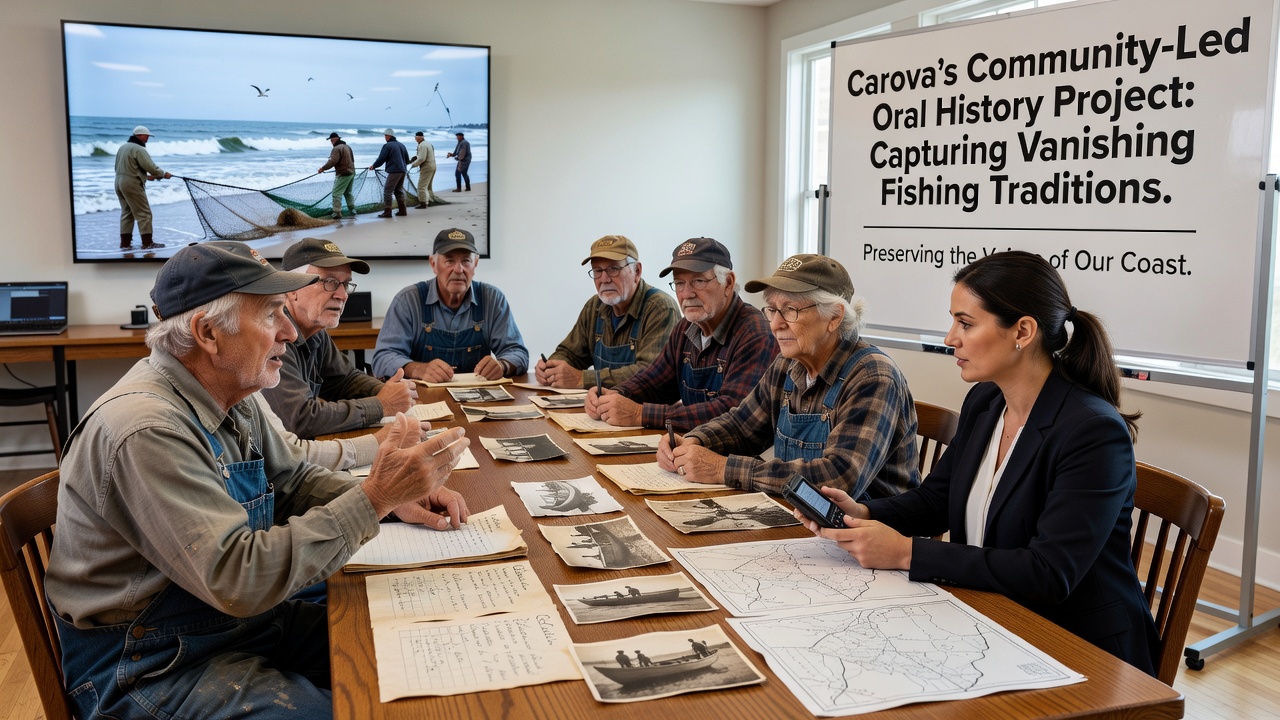
Turnout has remained steady, with twenty-three new contributors added during the summer of 2026 alone. Sessions often extend into group discussions where younger listeners ask about the differences between modern fiberglass hulls and the earlier wooden vessels that required constant caulking. Coordinators note that these exchanges help bridge generational gaps while adding layers of context to the core recordings.
Traditions Documented and September 2026 Events
The archive now contains descriptions of specific net-mending knots, seasonal bait sourcing routes, and the social customs that accompanied boat launches before dawn. Several accounts recount the use of hand signals between vessels when radio equipment was unavailable, and others explain how crews divided shares of the catch according to longstanding agreements. These details appear alongside photographs of equipment that has since been replaced by hydraulic winches and GPS units.
Planners have scheduled a public listening event for September 12, 2026, at the Carova community hall where excerpts from the collection will play followed by live demonstrations of net repair. A second gathering on September 27 will focus on student workshops that pair high-school participants with experienced fishers to recreate one traditional technique using replica tools. Organizers expect the events to draw several hundred attendees based on registration numbers collected through the library website.
Additional material comes from cross-referencing with similar efforts in other coastal regions, including studies conducted by Fisheries and Oceans Canada that examined parallel changes in small-boat fisheries. One segment of the Carova collection compares local practices with those recorded in Atlantic Canada communities where similar declines in hand-line fishing occurred during the same decades.
Archive Access and Long-Term Goals
The digital collection resides on a platform hosted by the Carova Public Library, and users can search by keyword, decade, or speaker name. Hard copies of transcripts sit in the reference section alongside related books on maritime history. Project leaders continue to accept new submissions, and they plan to expand the scope in 2027 to include accounts from neighboring villages that share the same fishing grounds.
Conclusion
The oral history project continues to expand its holdings while maintaining strict attention to accuracy through participant review of transcripts. As more recordings enter the archive, the collection provides a record of fishing knowledge that reflects both continuity and adaptation along the Carova shoreline.