Mara Neumann · 14 October 2026
Carova's Business Network Aligns Road Repair Funds With Sea Turtle Nesting Timelines For Event Scheduling
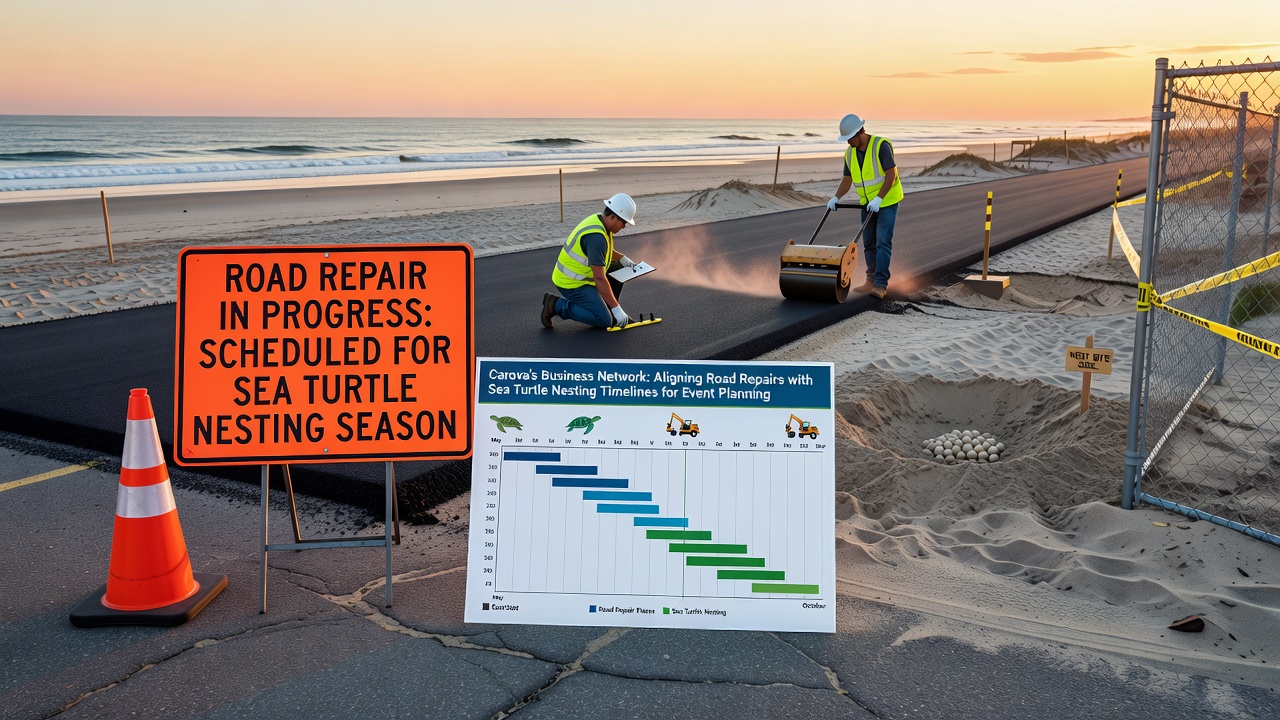
Coastal communities like Carova face ongoing demands for infrastructure maintenance while protecting sensitive marine habitats, and local business networks have developed coordinated approaches that tie road repair allocations directly to sea turtle nesting cycles. These efforts support event scheduling by minimizing construction disruptions during peak visitor periods, with data from monitoring programs guiding the timing of projects along key coastal routes.
Coastal Infrastructure Needs and Wildlife Protection Overlaps
Carova's road network requires periodic repairs due to erosion, storm damage, and heavy seasonal traffic, yet these activities intersect with loggerhead and green sea turtle nesting seasons that run from May through October each year. Observers note that construction during nesting windows can interfere with beach access points and increase disturbance risks, so business leaders have shifted funding timelines to complete major work outside those months. Figures from the North Carolina Wildlife Resources Commission show nesting activity peaks between June and August, prompting alignment strategies that reserve repair budgets for November through April windows when possible.
Researchers at coastal universities have documented how synchronized planning reduces conflicts, and one study from the University of North Carolina examined similar projects where preemptive scheduling lowered habitat impacts by measurable margins. Funds allocated through the business network now prioritize early-season assessments so crews can mobilize before turtles return, creating clearer pathways for community events later in the year.
Funding Mechanisms and Timeline Coordination
The Carova business network pools resources from local enterprises and grants to cover repair costs, with agreements that lock in spending phases around documented nesting data from beach patrols. This setup allows crews to address potholes, drainage issues, and surface upgrades during cooler months, then shift focus to event support as nesting concludes. Data indicates that such phasing prevents overlap with egg-laying periods, while still meeting annual maintenance targets set by county engineering reports.
What's notable is the use of shared calendars that incorporate nesting reports from federal monitoring programs, enabling precise fund releases tied to biological milestones rather than fixed calendar dates. Businesses contribute portions of their revenue streams to a central pool, and those contributions scale with projected event revenues from fall tourism surges. October 2026 stands out in current projections because repairs completed by the prior spring will leave roads in optimal condition for harvest festivals and wildlife viewing tours scheduled that month.
Event Scheduling Benefits and Broader Effects
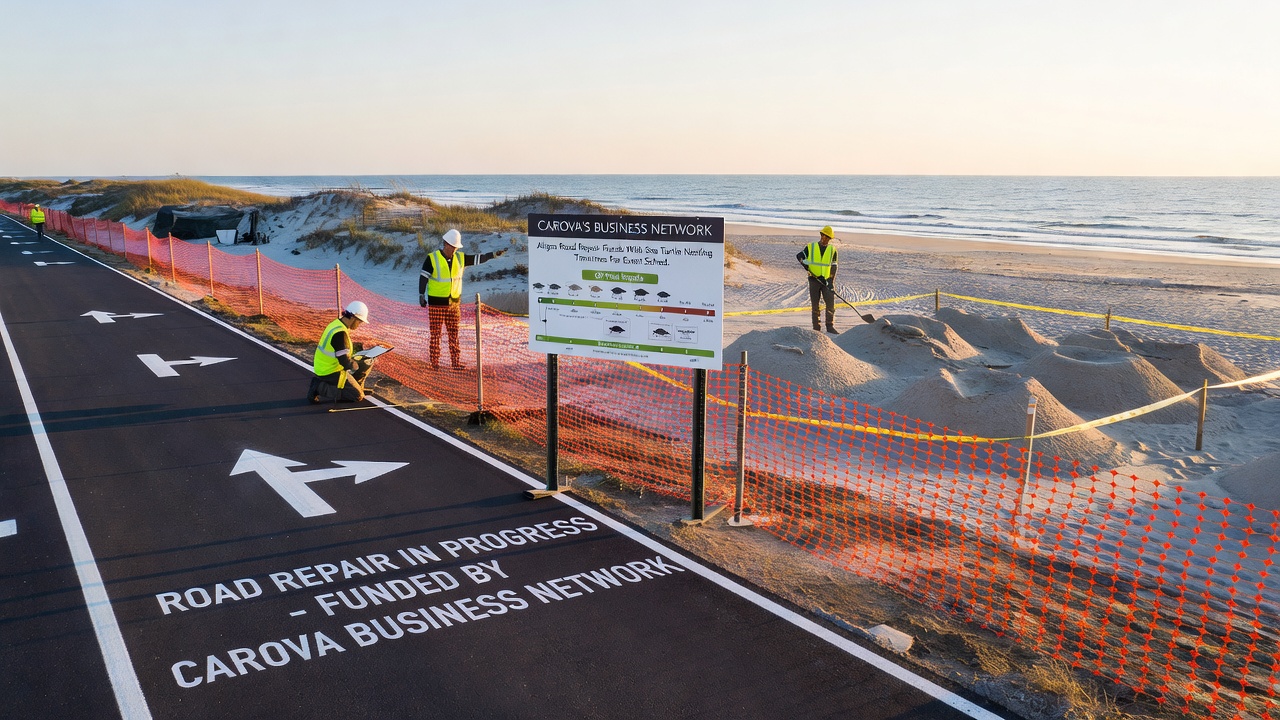
Event organizers in Carova gain reliable access windows once road projects finish ahead of peak activity, and this coordination has supported larger gatherings such as coastal cleanups and educational tours without last-minute rerouting. Those who've tracked attendance figures report steadier participation when infrastructure remains accessible, and the network's approach extends to vendor logistics that depend on clear travel routes. External data from NOAA Fisheries sea turtle recovery reports reinforces the value of avoiding construction during sensitive periods, while a separate analysis from Australian marine research institutions highlights comparable timing strategies in other coastal zones.
Community members often discover that aligned funding also frees resources for signage and temporary barriers that protect nests near event sites, creating layered protections. Repair crews document their progress against nesting maps, and adjustments occur when patrol teams report early or late activity shifts due to weather patterns. This flexibility keeps projects on track while supporting tourism calendars that draw visitors interested in both the area's history and its wildlife.
Long-Term Planning and Monitoring Results
Longer-range plans now incorporate climate-adjusted nesting forecasts, allowing the network to reserve contingency funds for unexpected delays without derailing event commitments. Monitoring teams compile annual summaries that feed back into budget decisions, and those summaries reveal consistent improvements in both road conditions and nest success rates when repairs stay outside active seasons. People involved in the process point to reduced equipment mobilization costs as a direct outcome, since crews avoid repeated setups during restricted windows.
October 2026 planning sessions already reference these cumulative records, with organizers mapping events around finalized road sections and confirmed nesting closures. The network continues to refine its model through regular reviews, drawing on patrol data and traffic counts to balance maintenance needs against visitor flows.
Conclusion
Carova's approach demonstrates how business networks can integrate wildlife timelines into infrastructure funding cycles, resulting in smoother event scheduling and sustained habitat protection. Ongoing monitoring and shared data sources ensure the strategy adapts to annual variations, while external references such as those from NOAA and international studies provide benchmarks for refinement. This coordination leaves roads prepared for October 2026 activities and beyond, with nesting seasons left undisturbed by construction activity.